

How to Spot Wind Damage to Your Roof
High winds are one of the most underestimated threats to a home or business roof. In fact, strong winds can loosen shingles, crack flashing, and leave your roof vulnerable to leaks. Spotting wind damage to your roof early helps you avoid emergency repairs, extend the life of your roofing system, and protect your investment.
If left untreated, even minor wind damage to roofs can lead to water intrusion, mold growth, and a weakened structure. Whether the damage is from a thunderstorm, hurricane, tornado, or straight-line winds, knowing the warning signs puts you a step ahead of costly problems.
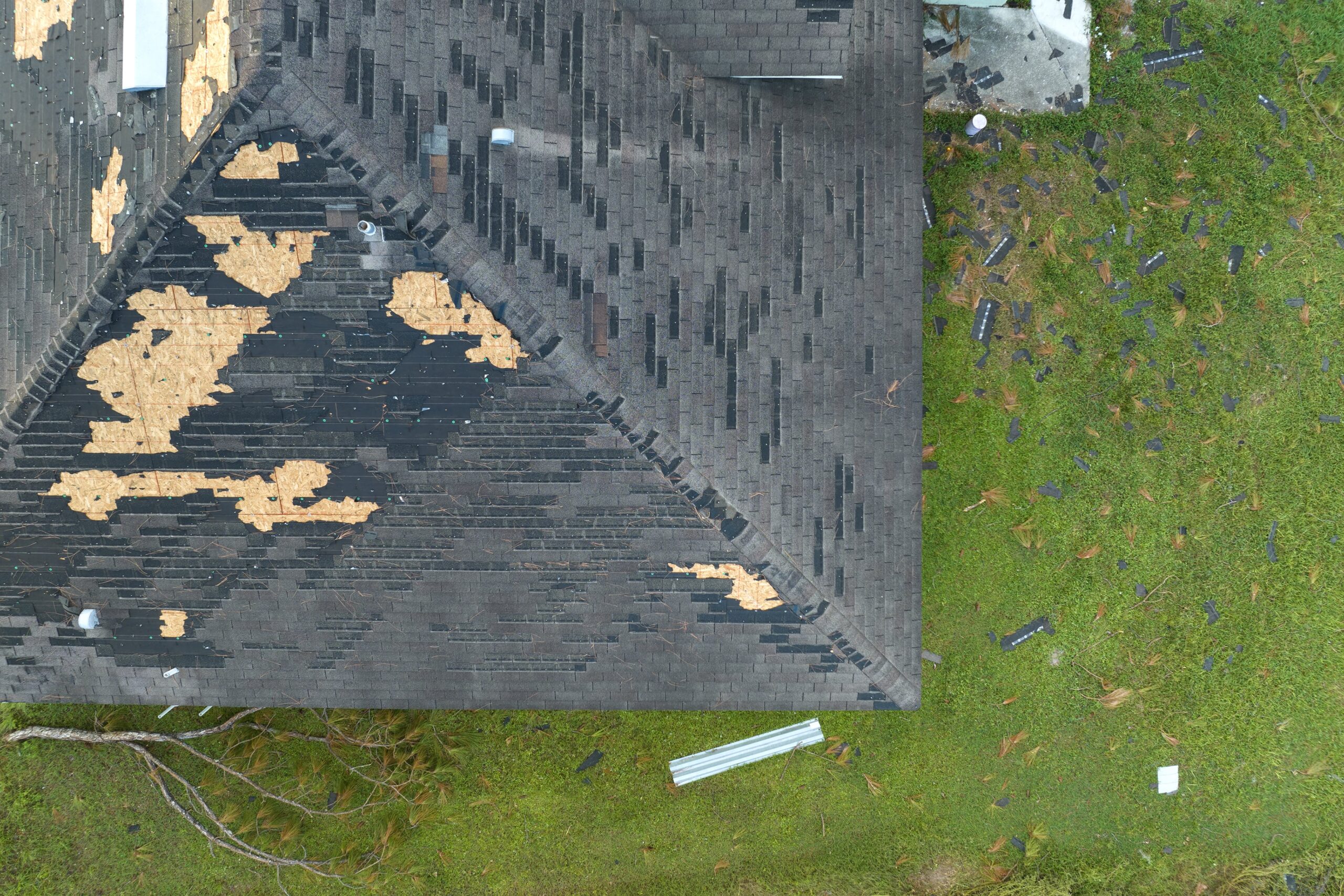
Understanding How Wind Damages a Roof
Wind damage to roofs generally comes from two sources: direct wind force and wind-borne debris.
Different wind speeds create different risks; gale-force winds (39–54 mph) may loosen or curl shingles, while stronger winds (55–72 mph) can tear them off and damage gutters. Hurricane-force winds above 74 mph can strip away large roof sections, and even short bursts from tornadoes can cause catastrophic failures.
A roof’s vulnerability depends on its slope, age, material, and the quality of its installation. Steeper roofs often resist uplift better, while older or poorly installed shingles are more likely to break loose. As wind flows over a roof, it creates uplift pressure that breaks adhesive seals, leaving shingles detached and underlayment exposed to rain.
Flying debris, such as tree limbs or outdoor furniture, can also add to the damage.
Types of Wind Events That Can Cause Roof Damage
Not all wind events are the same, but each can be equally destructive in different ways:
Hurricane Winds
Sustained winds of 74 mph and above can cause significant roof loss. Hurricanes last longer than most storms, subjecting roofs to hours of continuous strain.
Tornado Winds
While brief, tornadoes produce wind speeds over 100 mph, creating sudden, concentrated destruction. Roofs in the direct path may be stripped within seconds.
Straight-Line Winds
Often overlooked, straight-line winds occur in severe thunderstorms and can exceed 60 mph. They knock down trees, peel back shingles, and bend flashing, often mimicking the damage caused by tornadoes.
Derecho Events
Derechos are massive, fast-moving windstorms that can span hundreds of miles. Their sustained high winds can cause extensive roofing failures across entire communities.
Visible Signs of Roof Wind Damage
Wind doesn’t always leave behind obvious destruction, but there are several visible warning signs you can look for:
- Missing shingles: One of the most common signs. High winds can peel off shingles in patches or even entire rows, leaving bare underlayment exposed.
- Lifted or curled shingles: Shingles may look intact from a distance, but closer inspection reveals that their adhesive seal is broken, leaving edges lifted.
- Granule loss: Asphalt shingles may lose protective granules, leaving bald patches that accelerate wear. Granules often collect in gutters and downspouts.
- Dents or cracks: Metal roofing, vents, or flashing can be dented by flying debris. Shingles may also crack or split under wind pressure or after hail damage.
- Damaged flashing and gutters: Bent, loose, or detached flashing around chimneys and skylights often signals wind stress. Gutters can also be twisted or detached from fascia boards.
- Tree limb or debris impact marks: Fallen branches and airborne debris can leave visible punctures, scrapes, or broken sections across the roof surface.
Signs You Might Miss
Not all wind damage is visible from the outside. Subtle warning signs can appear inside your home or attic:
- Interior water stains: Brown or yellow discoloration on ceilings often signals a slow leak.
- Damp insulation: Wet attic insulation suggests moisture has seeped through the roof.
- Musty odors: Persistent damp smells indicate water intrusion and potential mold growth.
- Shingle misalignment: From the ground, look for wavy or uneven rows of shingles that suggest loosening.
If you notice any of these, schedule a professional roof inspection before the damage worsens.
Step-by-Step Roof Inspection After High Winds
Performing a cautious self-check after a windstorm can help you catch problems early while keeping safety a priority. Here’s a simple process homeowners can follow:
Step 1. Wait Until Conditions Are Safe
Never attempt an inspection during or immediately after dangerous weather.
Step 2. Walk Your Property Perimeter
Look for fallen branches or shingles on the ground and take photos of anything unusual.
Step 3. Use Binoculars From the Ground
This allows you to spot lifted shingles or bent flashing without climbing on the roof.
Step 4. Check Gutters, Downspouts, and Vents
Look for granules, dents, or blockages that suggest shingle or flashing damage.
Step 4. Inspect Your Attic and Ceilings
Look for water stains, wet insulation, or areas that are dripping.
Step 5. Document Everything
Take photos or videos to support future insurance claims or professional inspections.
These steps can help you spot roof wind damage quickly, but remember, they are not a substitute for a professional inspection, which may uncover hidden structural or moisture issues.
Professional Roof Inspection – What to Expect
While visual checks are helpful, a professional inspection digs deeper into the damage. Roofing experts use specialized tools and techniques that go beyond binoculars.
- Advanced tools: Professionals may use drones for overhead imaging, moisture meters to detect hidden leaks, and chalk marking to highlight lifted or loosened shingles.
- Detailed reporting: A typical inspection includes photos, written notes, and recommendations for repair or replacement. This report is crucial if you need to file an insurance claim.
- Trained eye: Roofers can identify subtle issues, like shingle nail pull-through or compromised seals, that most homeowners would miss.
Calling in a trusted contractor such as Premier Roofing ensures you get a thorough evaluation, backed by decades of storm damage expertise and a Certified Lifetime Workmanship Warranty.
Insurance and Roof Wind Damage Claims
Most homeowners’ insurance policies cover wind damage, but coverage details can vary depending on your location and provider.
Some policies pay Actual Cash Value (ACV), which accounts for depreciation, while others offer Replacement Cost Value (RCV), which covers the cost of a new roof of similar quality. It’s also important to review your deductible, since wind or storm deductibles are often higher than standard ones.
The Claims Process
When filing a claim, start with a professional inspection and submit documentation promptly. The process typically includes an adjuster’s visit, claim approval, and payout. If the initial settlement isn’t enough, contractors can help file supplemental claims to cover the full scope of repairs.
Thorough documentation is key to ensuring a smooth and fair outcome.
Preventative Measures to Reduce Wind Damage Risk
The best way to deal with roof wind damage is to prevent it in the first place. Homeowners can take proactive steps to minimize their risk:
- Schedule regular maintenance: Have your roof inspected at least once a year, and especially after major storms.
- Upgrade materials: Consider wind-resistant shingles rated for high uplift resistance, or switch to durable metal roofing.
- Secure flashing and vents: Ensure all roof penetrations, like skylights and vents, are tightly sealed and reinforced.
- Trim nearby trees: Overhanging branches can become dangerous projectiles in high winds.
- Remove loose items: Patio furniture, grills, and lawn décor can turn into flying debris during storms.
When to Repair vs Replace a Wind-Damaged Roof
Not all roof wind damage calls for a full replacement. The decision depends on the extent of the damage and the condition of your existing roof.
You might need a roof repair if…
A few missing shingles, small flashing issues, or minor gutter damage can often be fixed quickly by a professional.
You might need a roof replacement if…
Widespread shingle loss, visible structural compromise, or repeated wind damage may mean it’s more cost-effective to replace the roof entirely.
While repairs are less expensive upfront, repeated repairs actually can shorten your roof’s lifespan and cost more over time. Upgrading to durable, wind-resistant materials provides better protection and peace of mind.
For homeowners facing this decision, consulting with a reputable contractor like Premier Roofing’s residential roofing team ensures you receive expert guidance on whether repair or replacement is the best long-term solution.
Frequently Asked Questions
Can wind damage occur without visible signs?
Yes. Wind damage on a roof isn’t always apparent. Broken seals, lifted shingles, or small leaks can go unnoticed until they cause water intrusion.
How quickly should I address wind damage?
You should address roof wind damage right away. Even small gaps allow water in, leading to mold growth, rot, and interior damage.
Does insurance always cover wind damage?
Most policies include wind damage, but coverage depends on your deductible and whether you have ACV or RCV coverage. Always review your policy before filing a claim.
What’s the average cost to repair roof wind damage?
Repairs vary widely, from a few hundred dollars for minor shingle replacement to several thousand for structural damage. Insurance often offsets these costs.
How do I choose a reputable roofing contractor?
Look for a licensed, insured company with proven storm restoration experience. Check reviews, request references, and make sure they provide warranties like Premier Roofing’s Certified Lifetime Workmanship Warranty.
Spotting and Addressing Wind Damage Quickly
Catching roof wind damage early can save you thousands in repairs. Watch for visible signs like missing or curled shingles, inspect your attic after storms, and don’t overlook small leaks or musty odors. Always document your findings and contact a professional for confirmation.
If you suspect storm damage, it’s better to act quickly than wait. The longer your roof remains vulnerable, the greater the risk to your home.
Protect Your Roof from Wind Damage Today
High winds are unpredictable, but your roof’s protection doesn’t have to be. Premier Roofing has helped thousands of homeowners recover from wind damage to roofs nationwide.
With over 20 years of experience and an industry-leading Certified Lifetime Workmanship Warranty, we make the repair or replacement process as seamless as possible. Don’t wait until the next storm. Get a free wind damage inspection and quote to protect your home and restore your peace of mind.


13 Best Roofing Companies in Charlotte, NC in 2026 | Premier-Roofing.com
A lot of homeowners in Wichita end up replacing their roof sooner than expected, not because it was necessary, but because the damage wasn’t properly assessed early on. It happens more often than people think. If you’re searching ...

15 Best Roofing Companies in Raleigh, NC in 2026 | Premier-Roofing.com
A lot of homeowners in Wichita end up replacing their roof sooner than expected, not because it was necessary, but because the damage wasn’t properly assessed early on. It happens more often than people think. If you’re searching ...

15 Best Roofing Companies in Dallas, TX in 2026 | Premier-Roofing.com
A lot of homeowners in Wichita end up replacing their roof sooner than expected, not because it was necessary, but because the damage wasn’t properly assessed early on. It happens more often than people think. If you’re searching ...

15 Best Roofing Companies in Des Moines, IA in 2026 | Premier-Roofing.com
A lot of homeowners in Wichita end up replacing their roof sooner than expected, not because it was necessary, but because the damage wasn’t properly assessed early on. It happens more often than people think. If you’re searching ...



 COMPANY
 CUSTOMERS
 RESOURCES