


A roof replacement is one of the largest capital expenses most homeowners face, and it rarely happens at a convenient time. Storm damage, sudden leaks, or aging materials can force decisions quickly, often before homeowners have planned financially.
It’s important to understand that a roof is not just a cosmetic upgrade. It is a complete structural system made up of decking, ventilation, flashing, and protective roofing materials. Each component works together to protect your home from moisture, temperature extremes, and structural deterioration.
Roof financing is not only for homeowners who cannot afford a replacement outright. It is a strategic financial tool that allows homeowners to protect their property while preserving emergency savings, maintaining liquidity, and avoiding delays that could lead to more expensive damage. Below explains how to finance a roof.
Quick Snapshot – Which Financing Fits Your Situation?
If you don’t have time to read every detail, here’s the short version. Each financing option for roof replacement comes with trade-offs, and the best choice depends on what matters most to you, whether it’s speed, stability, or flexibility.
Personal Loan
A good option when you need funds quickly and don’t have equity. Approval is fast and payments are fixed, but rates are higher and depend heavily on your credit score.
Home Equity Loan (Fixed)
Works well if you know your project cost and want predictable monthly payments. These loans often come with lower interest rates compared to unsecured loans. The trade-off is slower funding since they require equity, an appraisal, and closing paperwork, plus your home is used as collateral.
HELOC (Home Equity Line of Credit)
A flexible option if your project may expand. You can draw funds as needed and sometimes benefit from tax perks. On the downside, most HELOCs have variable rates, so payments can change over time, and some accounts come with annual fees.
Cash-Out Refinance
Best suited if you are already planning to refinance. It can lower your mortgage rate while giving you access to the cash needed for your roof. The drawback is that it resets your mortgage term and may cost you more in the long run if the interest rates rise.
Roofing Company Financing
The most convenient path to financing for roof replacement since it’s offered directly through your contractor’s partners. Financing applications are simple, and some programs include promotional periods like zero percent APR for a set time. Be cautious, though, as once the promo ends, rates can climb, and extra fees may apply.
Insurance Claim + Deductible Financing
A strong option if storm damage caused the need for replacement. Insurance pays most of the cost, while financing helps cover deductibles or upgrades. The limitation is that it only works if your claim is approved, and deductibles still need to be paid legally.
Government Programs
Designed for low-income or rural homeowners. They may offer easier credit requirements or grants that don’t require repayment. However, approvals take longer, paperwork is extensive, and eligibility rules are strict.
Table of Contents
Why Roofing Costs Vary
Roof replacement financing costs vary significantly depending on structural complexity, material selection, and code requirements. Financing for a new roof must account for the entire system, not just surface materials. Steeper roofs require additional safety equipment, specialized installation techniques, and more labor hours. Premium residential roofing systems offer greater durability and longer lifespans but come with higher upfront costs.
During roof replacement, contractors may also discover damaged decking that must be replaced to maintain structural integrity. Ventilation upgrades may be required to meet modern building codes, especially in Colorado’s variable climate conditions. These factors influence the final project cost and explain why financing options are often necessary. Investing in proper installation and durable materials reduces long-term maintenance costs and improves overall performance.
Insurance First: Use Coverage Before Borrowing
When exploring roof replacement financing options, start with insurance if storm damage caused the problem. Homeowners insurance typically covers sudden issues like hail impact, wind damage, or structural compromise. It does not cover normal aging, gradual wear, or poor maintenance. Knowing this difference helps you avoid filing claims that will be denied and keeps expectations realistic.
If insurance applies, it can significantly reduce your out-of-pocket cost. Financing should then be used strategically, not automatically. Many homeowners finance only what insurance does not cover, such as the deductible, upgraded materials, or code-required improvements.
This approach limits total borrowing while allowing the roof replacement to move forward without delay. Be cautious of contractors who offer to “waive” deductibles. That practice is illegal and can create claim complications. The smartest path is simple: use available coverage first, then choose financing that fills the gap without overextending your budget.
Home Equity Roof Financing Options
Home equity can be one of the most powerful tools available when evaluating roof financing options. Instead of relying on high-interest unsecured debt, home equity financing allows homeowners to borrow against the value they have already built in their property. This approach often provides access to larger funding amounts with more favorable interest rates.
Because home equity loans and credit lines are secured by your home, lenders typically offer lower interest rates compared to personal loans or credit cards. This can make monthly payments more manageable and reduce the total cost of financing over time. For major structural investments like a roof replacement, these lower rates can make a meaningful financial difference.
However, using home equity also carries greater responsibility. Since your home serves as collateral, lenders require more documentation, including income verification, credit review, and often a home appraisal. Approval timelines are usually longer than unsecured financing options, and missed payments can have serious financial consequences. Home equity roof financing works best for homeowners who have built sufficient equity, want lower long-term borrowing costs, and are comfortable using their property to secure financing. It is especially well suited for full roof replacement projects, structural upgrades, or situations where stability and predictable repayment terms are a priority.
Roofing Company Financing
Roofing company financing is one of the most convenient options available. Many contractors partner with lenders to offer financing directly during the project approval process.
Applications are typically fast and simple. Some programs offer promotional periods with low or zero interest, helping homeowners manage short-term cash flow. However, interest rates may increase after promotional periods end. Always review full loan terms, including interest rates, repayment schedules, and total project cost as some contractors hide extra costs. When properly structured, contractor financing provides a convenient and efficient path to funding roof replacement.
Home Equity Loan (Fixed Second Mortgage)
A home equity loan provides a lump sum with a fixed interest rate and a structured repayment schedule. The primary advantage of this roof loan option is predictability. Your interest rate, monthly payment, and repayment timeline are locked in from the beginning, making it easier to budget for the full cost of your roof replacement.
Because the loan is secured by your home, lenders typically offer lower interest rates than unsecured financing options. This can significantly reduce the total cost of borrowing, especially for larger roofing projects. However, the approval process is more involved. Most lenders require a home appraisal to verify equity, along with income verification, underwriting, and closing documentation. This means funding may take several weeks instead of a few days.
Since your home is used as collateral, it is important to borrow responsibly. Missed payments can lead to serious financial consequences, including potential foreclosure. This financing option works best for homeowners who have a clear project estimate, want stable monthly payments, and are comfortable leveraging their home equity to fund a one-time roof replacement.

HELOC (Home Equity Line of Credit)
A HELOC, or home equity line of credit, functions differently from a traditional loan. Instead of receiving a lump sum upfront, you are approved for a credit line that you can draw from as needed during a defined draw period. This makes it one of the most flexible roof financing options available. This flexibility is especially useful if your roofing project scope changes during installation. For example, additional decking replacement, ventilation upgrades, or gutter improvements may be discovered after tear-off. A HELOC allows you to access additional funds without reapplying for a new loan.
Most HELOCs use variable interest rates, which means your monthly payments may increase if market rates rise. This variability can make long-term budgeting less predictable. Some lenders offer the option to convert portions of the balance to fixed rates, which can provide more stability. A HELOC is best suited for homeowners who want flexibility, expect possible project changes, and are comfortable managing potential interest rate fluctuations.
Cash-Out Refinance
Cash-out refinancing is a broader mortgage strategy that allows homeowners to replace their existing mortgage with a new, larger loan and receive the difference in cash. These funds can then be used to finance a roof replacement or other major home improvements. Because this option restructures your mortgage, it can provide access to significant funding at competitive interest rates. However, it also resets your mortgage term. This means you may extend the timeline of your loan and potentially pay more in total interest over time, even if the monthly payment remains manageable.
Cash-out refinancing makes the most sense when homeowners are already planning to refinance, especially if market conditions allow them to secure favorable rates. It may not be the most efficient option if used solely for roofing costs without broader financial benefits. This approach should be viewed as a strategic financial decision rather than a convenience-based financing solution.
Unsecured Personal Loans: Fast and Simple
Unsecured personal loans provide one of the fastest ways to access roof financing, especially for homeowners who do not have sufficient equity or need immediate repairs. These loans do not require collateral, and approval is often completed within days rather than weeks. Personal loans typically offer fixed interest rates and predictable monthly payments, which makes budgeting straightforward. This makes them a practical option for emergency roof replacements or situations where delaying repairs could lead to structural damage.
The primary drawback is higher interest rates compared to home equity financing. Because lenders assume more risk without collateral, borrowers with lower credit scores may face higher borrowing costs. Comparing lenders and using pre-qualification tools can help homeowners find competitive rates without impacting their credit score. Personal loans are best suited for homeowners who prioritize speed, simplicity, and fast access to funding.
Government and Assistance Programs
Some homeowners may qualify for government-backed roof financing options or assistance programs designed to support essential home improvements. These programs can help reduce upfront costs or provide favorable loan terms for qualified applicants.
Common programs include:
- FHA Title I Loans, which offer fixed-rate financing for home improvements
- FHA 203(k) Loans, which combine home purchase or refinance with renovation funding
- USDA Section 504 Programs, which provide loans or grants for eligible rural homeowners
- State and local energy efficiency programs, which offer incentives for qualifying upgrades
These programs typically require income verification, property eligibility review, and application documentation. Approval timelines are often longer than traditional financing options, and eligibility requirements may be strict. However, for qualifying homeowners, these programs can provide meaningful financial relief and make roof replacement more accessible.
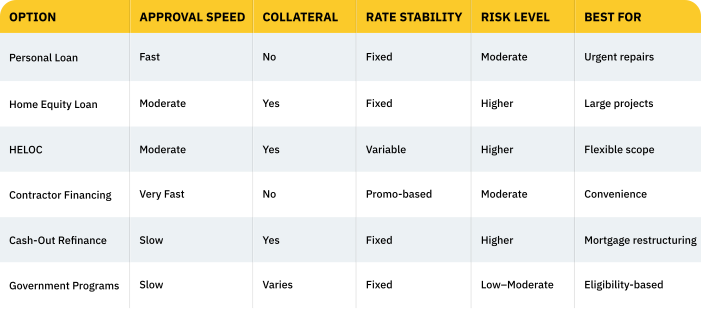
Recap: Comparing Roof Financing Options
Step-by-Step: From Estimate to Funding
Financing a new roof shouldn’t be an exhausting process. Here is a clear-cut roadmap that most homeowners can easily use:
- Obtain a professional inspection and quote, adding a small margin for hidden costs.
- Review your finances to determine what monthly payment feels manageable for you.
- Seek pre-approval from lenders that offer soft credit pulls to protect your score.
- Pick the best fit, whether it’s equity-backed, personal, or contractor-led financing.
- Provide your paperwork, such as proof of income, ID, or home appraisal if needed.
- Collect the capital and book the job, ensuring permits and lien waivers are ready.
Return on Investment and Long-Term Value
A roof replacement is not just an expense, it is an investment in the structural integrity, efficiency, and long-term value of your home. Unlike cosmetic upgrades, a new roof protects the entire property from moisture intrusion, insulation damage, and structural deterioration. Financing a roof allows homeowners to secure this protection immediately rather than risking more expensive repairs later.
From a resale perspective, a new roof is one of the most valuable improvements a homeowner can make. Buyers consistently view roof condition as a major factor when evaluating a property. A recently replaced roof improves buyer confidence, reduces negotiation risk, and can help homes sell faster. Remodeling industry data consistently shows strong cost recovery rates for roof replacement, especially in competitive housing markets.
Modern roofing systems also improve energy efficiency. Proper ventilation and updated materials help regulate attic temperature, reduce HVAC strain, and lower energy costs over time. This creates ongoing financial benefits beyond the initial installation. The true return on investment includes structural protection, avoided repair costs, improved efficiency, and increased resale appeal, not just property appreciation alone.
Secure Your Home With Confidence
Choosing the right roof financing option depends on your financial priorities, available equity, credit profile, and project timeline. Home equity loans often offer lower interest rates and stable payments, while personal loans provide faster access to funding. Contractor financing offers convenience, and insurance claims should always be explored first if storm damage is involved.
Delaying roof replacement can lead to more serious structural damage, higher repair costs, and reduced home value. Financing allows homeowners to address roofing issues immediately while maintaining financial flexibility. The most important step is starting with a professional inspection and detailed estimate. This ensures you understand your roof’s condition, available financing options, and the best path forward.
Don't put off the protection your home deserves. Request a professional quote today and take the first step toward protecting your home.
Protect your home. Plan strategically. Move forward with confidence.
Frequently Asked Questions


BLOG
Premier Roofing & The Press

13 Best Roofing Companies in Charlotte, NC in 2026 | Premier-Roofing.com
A lot of homeowners in Wichita end up replacing their roof sooner than expected, not because it was necessary, but because the damage wasn’t properly assessed early on. It happens more often than people think. If you’re searching ...

15 Best Roofing Companies in Raleigh, NC in 2026 | Premier-Roofing.com
A lot of homeowners in Wichita end up replacing their roof sooner than expected, not because it was necessary, but because the damage wasn’t properly assessed early on. It happens more often than people think. If you’re searching ...

15 Best Roofing Companies in Dallas, TX in 2026 | Premier-Roofing.com
A lot of homeowners in Wichita end up replacing their roof sooner than expected, not because it was necessary, but because the damage wasn’t properly assessed early on. It happens more often than people think. If you’re searching ...



 COMPANY
 CUSTOMERS
 RESOURCES