

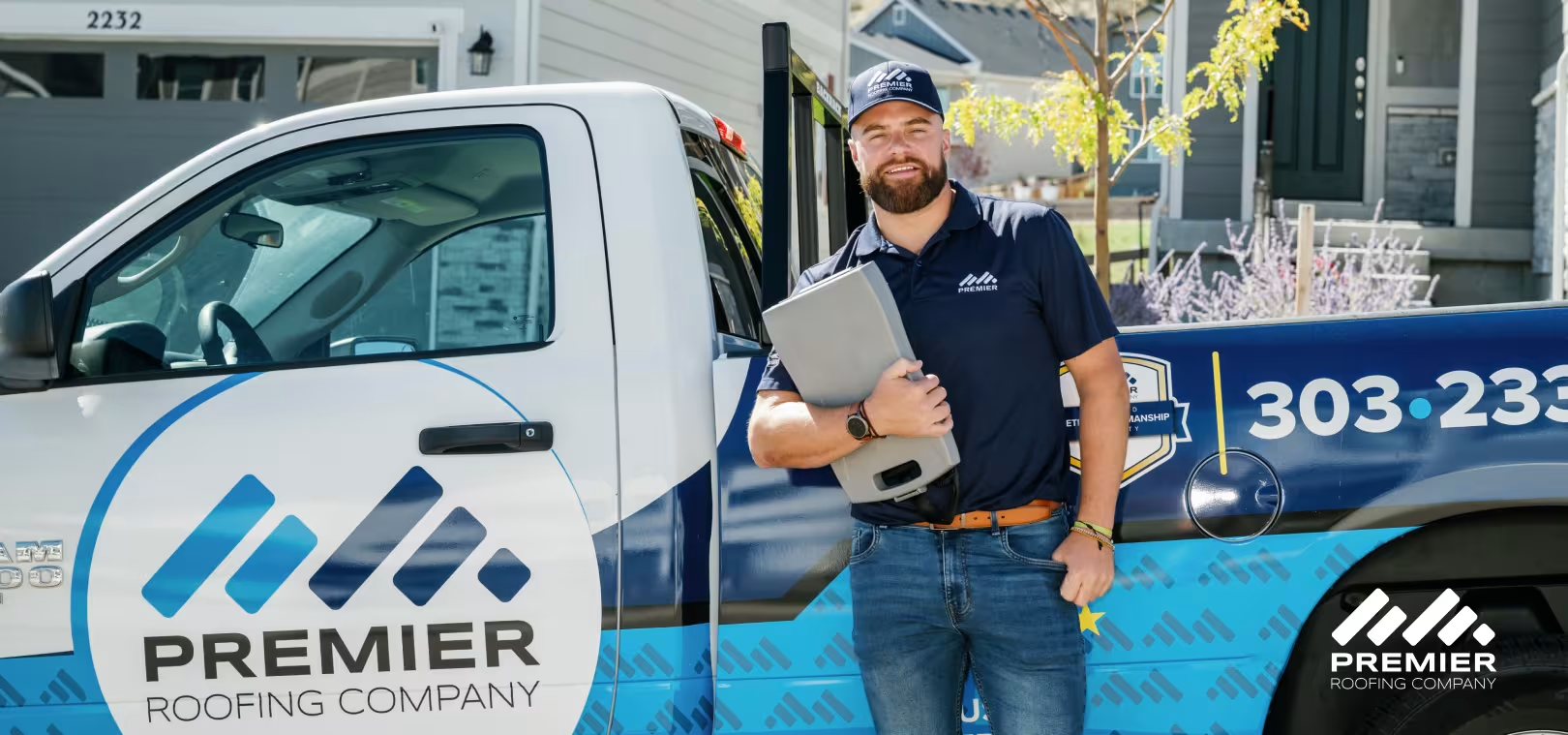
Denver is one of the most demanding roofing environments in the country. Roofs here must withstand frequent hailstorms, heavy snow loads, rapid freeze-thaw cycles, and intense high-altitude UV radiation. These forces accelerate material wear and expose weaknesses in installation methods that might never fail in milder climates. What looks like a minor installation shortcut today can become a major structural problem within just a few seasons.
That's why when homeowners research how to pick a roofing contractor in Denver, they are not simply hiring labor. They are choosing a professional responsible for designing, installing, and documenting a roofing system that must perform reliably for 20 years or more under extreme environmental stress. Every component, ventilation balance, flashing installation, underlayment protection, and permit compliance, affects long-term durability.
This guide walks you through a structured evaluation process so you can compare contractors objectively, avoid costly mistakes, and choose a roofing professional with confidence.
Not sure if your roof needs repair or replacement? Schedule a professional inspection with Premier Roofing to get a clear assessment and expert guidance on the best next step.
TL;DR: How Do You Choose the Right Roofing Contractor in Denver?
Choosing the right roofing contractor requires more than comparing prices. It means verifying legal credentials, reviewing detailed written contracts, and ensuring the contractor understands Colorado’s climate and insurance requirements. Roofing systems must be designed and installed correctly to perform reliably under Denver’s hail, snow, and UV exposure.
Focus on these four evaluation pillars:
Legal legitimacy:
Verify the contractor operates as an established, licensed business, not a temporary storm crew. Confirm their business registration and local operating history.
Insurance protection:
Ensure the contractor carries active general liability and workers’ compensation insurance. This protects you from financial liability if accidents or property damage occur during installation.
Written scope of work:
A professional contractor provides a detailed written estimate outlining materials, ventilation design, flashing replacement, and installation procedures. This allows accurate side-by-side comparison.
Warranty documentation:
Confirm both manufacturer and workmanship warranties are clearly documented in writing. Warranty protection depends on proper installation and contractor accountability.
If your project involves storm damage, understanding the insurance process helps you pick a good roofing contractor and evaluate recommendations accurately:
Table of Contents
- The Consequences of Picking the Wrong Roofing Contractor
- How to Pick a Good Roofing Contractor in Denver
- How to Verify Legal and Operational Standing
- Contract Structure: What Protects You (and What Doesn’t)
- Comparing Roofing Bids the Right Way
- Protect Your Home, Choose with Confidence
- Frequently Asked Questions
The Consequences of Picking the Wrong Roofing Contractor
When it comes to roofing, the cheapest option or the quickest quote isn’t always the safest. Hiring the wrong roofer can lead to financial loss, legal complications, or unsafe installations that won’t survive Colorado’s extreme conditions.
Here are the most common risks of working with an inexperienced roofing company:
- Storm chasers who disappear after collecting your insurance check
- Unlicensed or uninsured workers who put you at liability risk
- No written contract, or vague terms with hidden fees
- Pressure tactics that rush you into signing or paying upfront
- Poor-quality workmanship that fails inspection or leaks in the next storm
The stakes are too high to take shortcuts. Premier Roofing helps homeowners avoid these pitfalls through transparency, accountability, and local expertise.
How to Pick a Good Roofing Contractor in Denver
Choosing a roofing contractor in Denver requires understanding the problem before accepting solutions. Denver roofs experience hail impact, snow accumulation, freeze-thaw expansion, and high UV exposure. These conditions accelerate aging and make installation precision critical.
Before contacting contractors, clarify whether your roof needs repair, replacement, or professional inspection. This allows you to evaluate contractor recommendations objectively rather than relying on inconsistent diagnoses.
Premier Roofing’s Denver team has decades of experience handling Colorado hail damage, roof replacements, and inspections across the metro area. If you’re unsure about your roof’s condition, schedule an inspection with our team in Denver to receive a clear evaluation and honest recommendations.
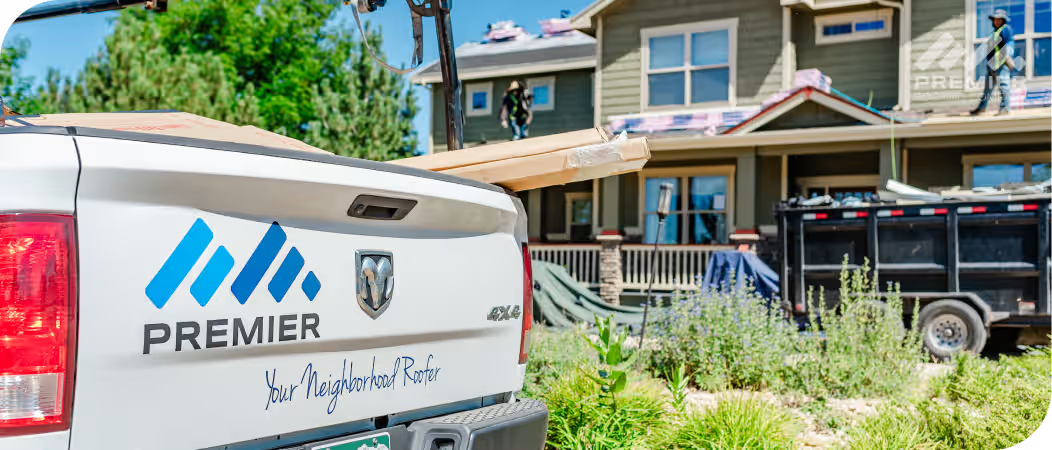
Step 1: Define what you need before you call anyone
Before contacting roofing contractors, clarify what problem you’re trying to solve. This prevents a common situation where each contractor offers a different diagnosis, making it difficult to compare recommendations objectively. Defining the issue first allows you to evaluate proposals based on facts rather than sales presentations.
Start by asking three key questions:
1. Is this a repair issue or a full replacement situation?
Localized damage, such as a single leak or missing shingles, may only require repair. However, widespread aging, repeated leaks, or structural wear may indicate replacement is the more effective long-term solution. This guide can help you evaluate the difference
2. Is the damage storm-related or caused by age?
Hail and wind damage can weaken shingles without obvious visible signs. Understanding how storm damage appears helps you assess contractor recommendations accurately.
3. Is the roof nearing the end of its lifespan?
If your roof is approaching 15-20 years old, repairs may only provide temporary protection. Review common replacement warning signs here.
Clarifying these factors ensures you can compare contractors based on clear, consistent criteria.
Step 2: Build a Short List (3-5 Contractors)
Once you understand what your roof may need, the next step is narrowing your options to a small group of qualified contractors. Most homeowners find that reviewing three to five companies provides enough comparison without becoming overwhelming.
Start by focusing on local companies with a real presence in the Denver metro area. Contractors who operate locally year-round are more likely to understand Colorado’s weather conditions, municipal permit requirements, and warranty responsibilities. They are also easier to reach if questions arise after the project is completed.
As you build your list, look for contractors who demonstrate:
- A consistent business identity with clear contact information
- Verified reviews across multiple platforms, not just one website
- Recent roofing projects in the Denver area
- A licensed and insured operation that openly shares credentials
It’s equally important to watch for warning signs. Contractors who refuse to provide a license number, pressure homeowners to sign immediately, or appear only after large hailstorms may not maintain a long-term presence in the area.
Step 3: Ask 6 Questions That Reveal Quality Fast
Asking the right questions early helps you distinguish between professional roofing contractors and sales-driven crews. Qualified contractors provide clear, verifiable answers and documented proof, not vague assurances or pressure tactics. These questions help confirm legal compliance, installation quality, and project accountability.
Ask each contractor the following:
1. Are you licensed to operate in my municipality?
Denver-area municipalities have specific permit and licensing requirements. Contractors must be properly registered to perform roofing work legally.
2. Can you provide proof of general liability and workers’ compensation insurance?
Active insurance protects you from financial liability if accidents or property damage occur during installation.
3. Will you provide a written scope of work before signing?
A professional contractor documents materials, ventilation design, flashing replacement, and installation procedures in writing. This allows accurate comparison.
4. Who pulls permits and schedules inspections?
Qualified contractors handle permits and ensure work meets local building codes and inspection standards.
5. What manufacturer certifications do you hold?
Certifications indicate the contractor is trained to install roofing systems according to manufacturer requirements.
If insurance is involved, review how storm damage roof insurance claims typically work. Professional contractors document damage and provide repair scopes. They do not interpret policy language or negotiate settlements unless separately licensed.
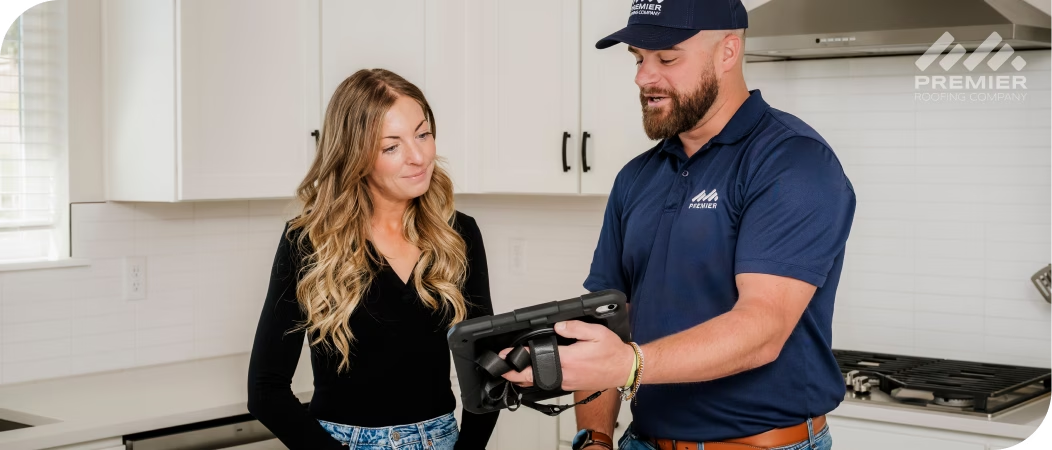
Step 4: Require a Written Estimate to Compare
Never compare roofing bids based on verbal quotes alone. Without a written estimate, you cannot verify what is actually included, and important details may be omitted. A professional roofing contractor provides a clear, written proposal that defines the full scope of work. This documentation protects you from hidden costs and allows accurate comparison between contractors.
- A strong roofing estimate should include:
- Tear-off procedures and how existing materials will be removed
- Decking inspection criteria and replacement policy if damage is found
- Underlayment type and moisture protection layers
- Flashing replacement details around vents, chimneys, and roof transitions
- Ventilation system specifications to ensure proper airflow
- Cleanup and debris disposal responsibilities
- Workmanship and manufacturer warranty documentation
- Each category affects roof performance, durability, and warranty protection.
- Without this level of detail, it is impossible to evaluate proposals accurately.
If shingles show widespread aging or structural wear, replacement may be more appropriate than repair. Confirm whether replacement is more appropriate than repair.
How to Verify Legal and Operational Standing
Municipal License Verification
Every city in the Denver metro area including Denver, Aurora, and Lakewood maintains its own contractor licensing requirements. A roofing contractor licensed in one municipality is not automatically authorized to work in another. When learning how to pick a roofing contractor, verifying municipal licensing ensures the contractor can legally pull permits and complete inspected work.
Start by asking for the contractor’s specific license number for your city. Then visit your municipality’s Building Department or Contractor Licensing website to confirm the license status. The business name on the license must match the name listed on the proposal exactly. If the license is held under a different individual or company name, that is a serious red flag.
Confirm the license is listed as Active, not expired or inactive. Without an active license, the contractor cannot legally obtain permits or complete code-compliant roofing work. Established companies like Premier Roofing maintain active licenses across all serviced municipalities and provide verification upfront.
General Liability Insurance
General liability insurance protects homeowners if the contractor accidentally damages the property during the roofing project. This includes scenarios such as structural damage during tear-off, broken skylights, or water intrusion caused during installation.
Contractors should provide a Certificate of Insurance (COI) that clearly lists coverage details. The certificate must show at least $1 million in coverage, which is the industry standard for professional roofing contractors. Verify that the policy is current and remains active for the entire project duration.
Most importantly, the company listed on the COI must match the company performing the work. Without proper liability insurance, the homeowner may be forced to cover repair costs or file a claim under their own insurance policy.
Workers’ Compensation Coverage
Workers’ compensation coverage protects homeowners from legal and financial liability if a worker is injured on their property. Roofing is a high-risk profession, and without active workers’ compensation insurance, injury claims can shift directly to the homeowner.
Always request a valid Workers’ Compensation certificate and verify that the policy is active and current. If a contractor cannot provide this documentation, it is a major red flag and should end the evaluation process immediately.
Some contractors carry insurance for owners but not for the crews performing the work. This creates serious liability gaps. Professional roofing companies ensure every worker on-site is fully covered. Premier Roofing protects homeowners by maintaining comprehensive workers’ compensation coverage, eliminating homeowner risk and ensuring safe, compliant project execution.
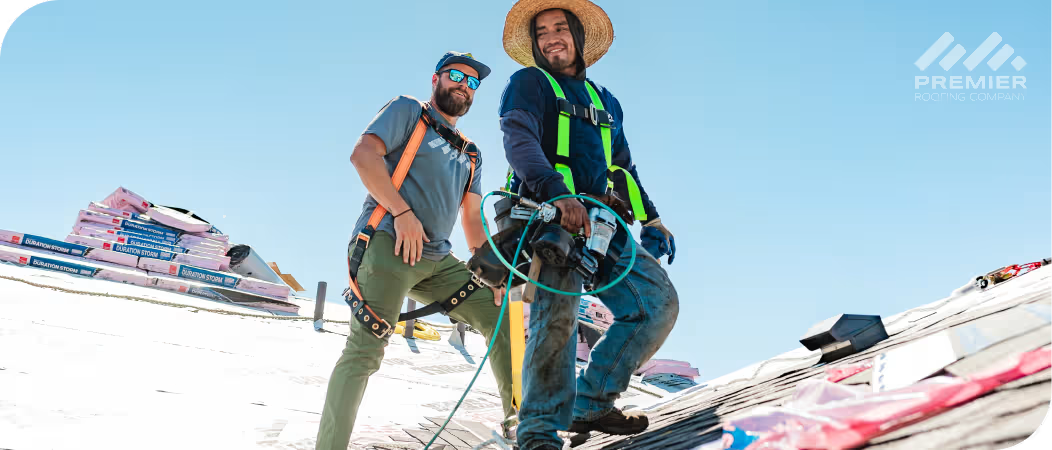
Contract Structure: What Protects You (and What Doesn’t)a
Legal Requirement
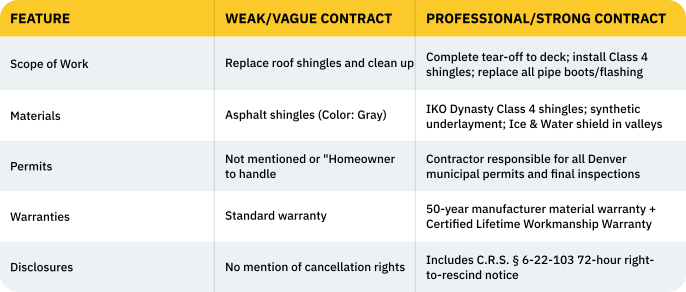
Colorado law requires every roofing project to be governed by a written contract signed by both the homeowner and contractor. Under Colorado consumer protection law (C.R.S. § 6-22-103 and Senate Bill 12-038), this contract must clearly define the scope of work, pricing, and legal protections for the homeowner.
One critical protection is the right to rescind the contract within 72 hours if your insurance claim is denied. This prevents homeowners from being locked into roofing agreements before insurance coverage is confirmed. Contractors are required to include this rescission language in the written contract.
Colorado law also prohibits contractors from offering to “pay,” “waive,” or “rebate” your insurance deductible. Any contractor who promises to cover your deductible is violating state law. This is a major legal red flag and may indicate fraudulent or non-compliant business practices. Reputable roofing contractors follow legal requirements and provide transparent, compliant agreements that protect both parties.
Scope Clarity
A vague roofing contract exposes homeowners to serious risk. Simple descriptions such as “Replace roof - $10,000” do not define what materials or installation methods will be used. This allows contractors to cut corners on critical system components that affect durability and warranty protection.
A proper contract must clearly specify a full tear-off down to the structural roof decking. Leaving old shingles or underlayment in place creates hidden failure points and reduces lifespan. The contractor should also inspect the decking and clearly state the cost per sheet if replacement is required due to rot or moisture damage.
The agreement must identify the exact underlayment type, ice and water shield placement, and ventilation components. These materials are essential for protecting Denver homes from freeze-thaw cycles and moisture intrusion. Flashing around chimneys, vents, and roof transitions should always be replaced, not reused, since flashing failures are a leading cause of roof leaks.
Payment & Permit Responsibility
Payment structure provides insight into a contractor’s financial stability and professionalism. A reasonable deposit, typically between 10% and 33% is standard to secure materials and schedule the project. However, contractors requesting full payment upfront present a serious risk and may lack financial stability or accountability.
Payments should be structured based on project milestones, such as deposit, material delivery, and final completion after inspection. This ensures the contractor remains accountable throughout the installation process.
The contract must also state that the contractor is responsible for obtaining all municipal permits and scheduling inspections. If a contractor asks the homeowner to pull permits as an “owner-builder,” it may indicate they are unlicensed or attempting to avoid legal responsibility. Professional roofing contractors manage permitting and inspections to ensure compliance with Denver building codes and safety requirements.
Comparing Roofing Bids the Right Way
Side-by-Side Comparison Mechanics
To compare roofing bids accurately, you need to evaluate the scope, not just the total price. Start by breaking each estimate into five key categories: Materials, Ventilation, Flashing, Underlayment, and Labor/Cleanup. These components determine how well your roof will perform under Denver’s hail, snow, and freeze-thaw conditions.
Next, compare each category line-by-line. For example, confirm whether all bids include the same shingle type, such as Class 4 impact-resistant shingles, and whether ventilation and flashing replacement are clearly specified. Missing details often indicate incomplete protection.
Only after comparing scope categories should you review the total price. If one bid omits critical components listed in others, it is not truly cheaper, it is incomplete. Accurate comparison ensures you select a contractor based on installation quality, not misleading pricing.
Missing Scope Detection
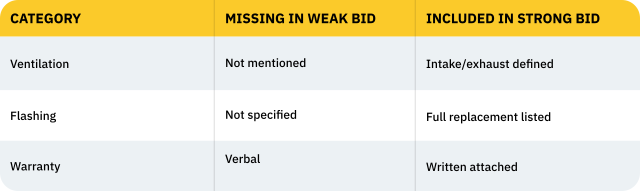
“Missing scope” is a common tactic used by low-quality contractors to make bids appear cheaper while omitting critical protection components. These omissions often lead to leaks, warranty problems, and unexpected costs later.
In Denver’s climate, ice and water shield protection in valleys and eaves is essential. If it is not clearly listed, the roof is vulnerable to moisture intrusion. Ventilation is another critical factor. Many older Denver homes have imbalanced airflow, and professional bids include ventilation corrections to protect shingle lifespan and warranty eligibility.
Flashing replacement should also be explicitly stated. Reusing old flashing increases leak risk and shortens roof lifespan. Finally, professional estimates include a price per sheet for plywood replacement, ensuring transparency if structural repairs are needed. Missing these details indicates an incomplete and risky proposal.
Protect Your Home, Choose with Confidence
For many homeowners in Denver, the process usually begins the same way. A storm passes through. Maybe a few shingles look out of place, or a neighbor mentions hail damage. Suddenly the question appears: Who should I trust to look at my roof? Understanding how to pick a roofing contractor in Denver helps turn that moment of uncertainty into a confident decision.
Homeowners working with Premier Roofing typically receive:
- Free, no-obligation professional roof inspections
- No upfront payment required before project completion
- Fully licensed, insured, and manufacturer-certified crews
- Clear written contracts with transparent pricing and scope
- Extensive experience with residential and multi-family roofing across the Denver metro area
Choosing the right contractor ultimately means choosing peace of mind. When a roofing system is installed correctly and designed for Colorado’s climate, it protects your home’s structure, your belongings, and your long-term property value.
Frequently Asked Questions
BLOG
Premier Roofing & The Press

13 Best Roofing Companies in Charlotte, NC in 2026 | Premier-Roofing.com
A lot of homeowners in Wichita end up replacing their roof sooner than expected, not because it was necessary, but because the damage wasn’t properly assessed early on. It happens more often than people think. If you’re searching ...
15 Best Roofing Companies in Raleigh, NC in 2026 | Premier-Roofing.com
A lot of homeowners in Wichita end up replacing their roof sooner than expected, not because it was necessary, but because the damage wasn’t properly assessed early on. It happens more often than people think. If you’re searching ...

15 Best Roofing Companies in Dallas, TX in 2026 | Premier-Roofing.com
A lot of homeowners in Wichita end up replacing their roof sooner than expected, not because it was necessary, but because the damage wasn’t properly assessed early on. It happens more often than people think. If you’re searching ...



 COMPANY
 CUSTOMERS
 RESOURCES